
The object library · 24 / 35
Haviland China
Haviland is the Limoges porcelain house founded by the American merchant David Haviland in 1842, later split between Haviland & Co. and Theodore Haviland from 1892. Much of its production went to the American market, where its white blanks and soft-coloured decoration were widely imitated by other studios. Pattern identification is a documented field, with collector references and clubs. The honest questions are the usual ones: which firm, which blank, whose decoration, and what condition.
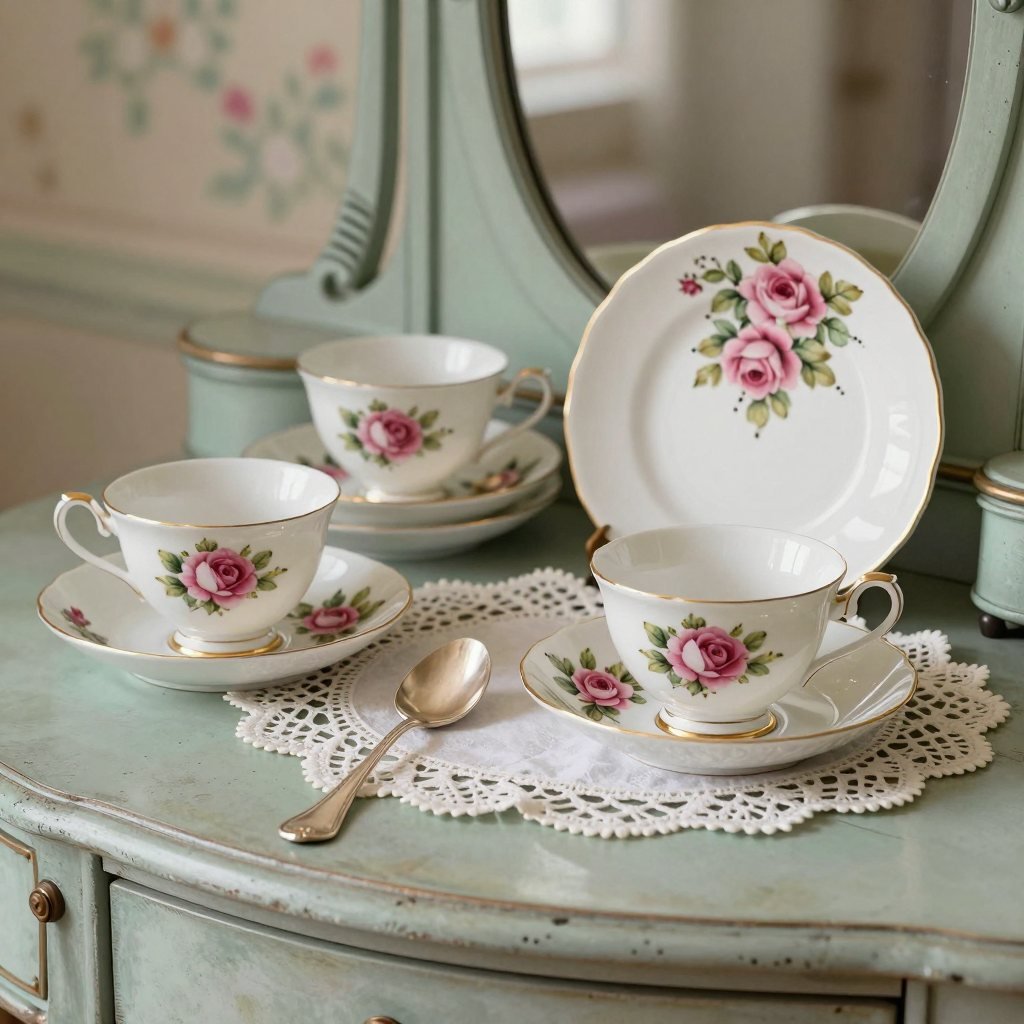
Begin with the details
What to look for.
Tell the two Havilands apart
Haviland & Co. and Theodore Haviland were separate firms from 1892, each with its own marks and pattern lists. Published references identify marks by period. Keep the mark’s exact wording in your records, and identify the firm before the pattern, since the lists differ.
Work from pattern references
Haviland patterns are documented in collector references and club pattern sheets, where shape numbers and decoration names anchor identification. Check the pattern’s documented production years rather than trusting a listing’s description. Pattern plus shape number identifies a piece more reliably than decoration alone.
Read decoration and condition separately
Blanks left the factory to be decorated by studios and amateurs, so painting quality varies widely on the same pattern. Gilding wear, hairlines and rim chips are the common condition notes. Record what is factory, what is studio and what is later, and keep attributions labelled as attributions.
Questions collectors ask
Before you go further.
Who was Haviland?
David Haviland, an American merchant, established a porcelain works in Limoges in 1842; the family firms supplied the American market for decades, and the business split between Haviland & Co. and Theodore Haviland in 1892. Both continued making and decorating porcelain in Limoges.
How much is Haviland china worth?
Services and pieces range widely, from modest sums for common patterns in used condition to high prices for rare documented sets. Completeness, condition and pattern identification drive value. Compare completed sales of the specific pattern, and keep asking prices out of the comparison.
How can I identify a Haviland pattern?
Collector references and Haviland clubs publish pattern and shape documentation. The back mark narrows the firm and period; the shape number, often impressed, narrows the blank; decoration then identifies the pattern. Work through the three in order rather than matching decoration alone.
Where was Haviland china made?
In Limoges, France, from 1842 onward, for largely American customers. The Haviland firms were part of the wider Limoges industry, making and buying blanks and arranging decoration. Our Limoges china family covers the shared background.
Keep exploring