Limoges China
Reading a Limoges Mark Honestly
A Limoges mark names a place, not a date and not a single maker. Read the wording, the 1891 clue and the decoration in the right order.
 Fields StableANTIQUES
The object library · 23 / 35
Limoges china is hard-paste porcelain made in and around the French city of Limoges, where deposits of kaolin were discovered at Saint-Yrieix in the 1760s and export to the American market boomed from the 1880s. The name covers many factories and many decorating studios, not one maker: a piece may pair a factory blank with studio decoration, and marks vary accordingly. Reading a Limoges mark honestly means identifying who marked it, and in what order, without turning the mark into a date it does not carry.
Begin with the details
Dozens of firms marked porcelain in Limoges, from factories to decorating studios that bought white blanks. ‘Limoges’ in the mark names the place, not the maker and not the date. Collect the mark’s exact wording and layout, and check it against published references before any attribution.
American tariff law required the country of origin on goods exported to the United States from 1891, so pieces marked ‘France’ or ‘Limoges France’ generally left after that date. The absence of the country says a piece is earlier, or was sold elsewhere — a useful boundary, not a precise date.
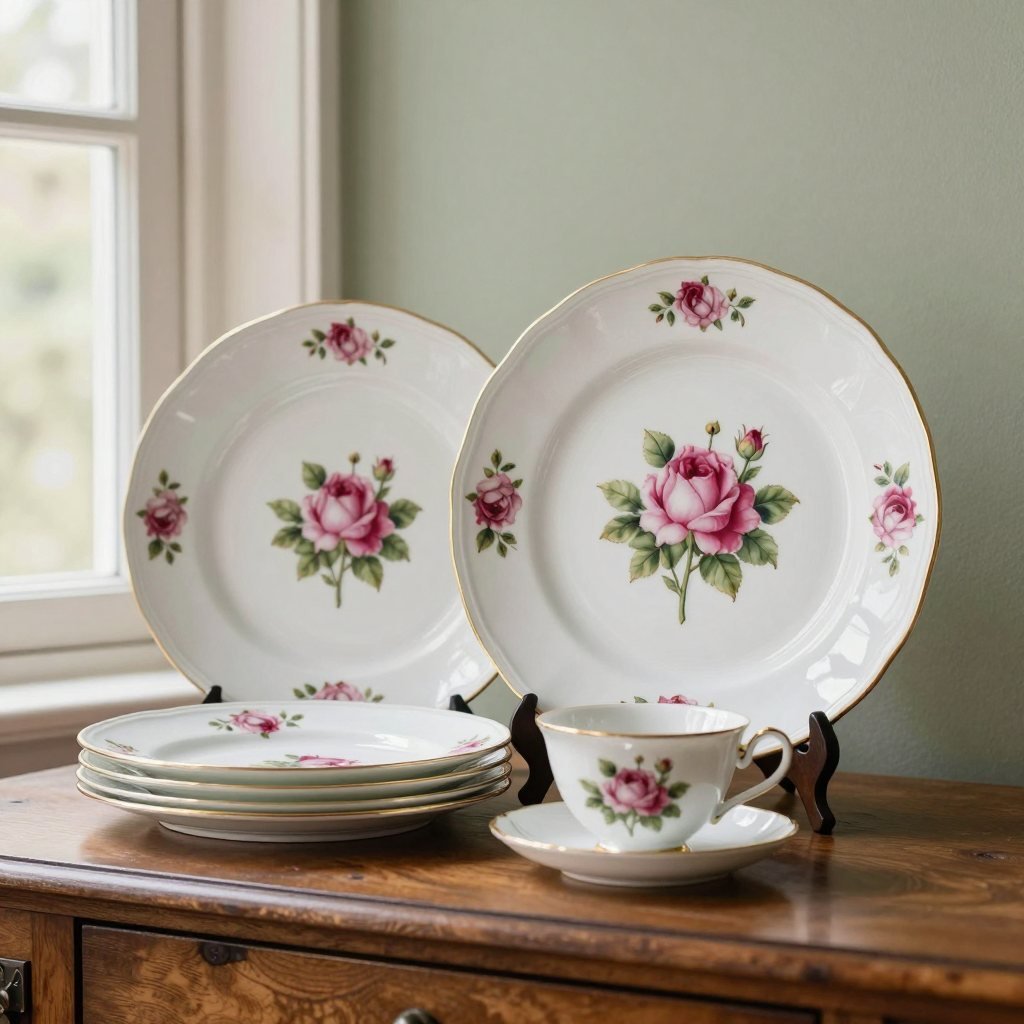
A white blank may have been decorated by the factory, by an independent studio or by an amateur at home, sometimes decades apart. Gilding and enamel quality differ accordingly. Record decoration as a separate question from the porcelain itself, and treat unsigned painter attributions as claims.
Questions collectors ask
Values range from modest pieces in the tens of dollars to museum-quality decorated antiques. Condition, decoration quality and completeness drive price more than the word Limoges itself. Compare completed sales for the specific pattern and decorator, and keep an asking price out of your records.
Hard-paste porcelain made in the Limoges region of France from the 1770s onward, using local kaolin. It became one of the main porcelain sources for the American market from the 1880s. The name covers many factories and decorating studios, not one maker.
Only within limits. Marks identify factories, decorating studios or retailers, and some were used for decades. The word France in the mark points after 1891 for American export, which is a boundary, not a date. Date from marks, form, decoration and documentation together.
Haviland is one of the Limoges makers — an American family firm producing in Limoges from the 1840s — rather than a separate category. Haviland blanks were also decorated outside the factory, so a Haviland piece raises the same attribution questions as any other Limoges china.
From the journal
Limoges China
A Limoges mark names a place, not a date and not a single maker. Read the wording, the 1891 clue and the decoration in the right order.
Keep exploring