Uranium Glassware
Testing Uranium Glass with a UV Light
A UV light answers one question about uranium glass: is uranium in the batch? Learn the lamp, the method and what the glow does not prove.
 Fields StableANTIQUES
The object library · 18 / 35
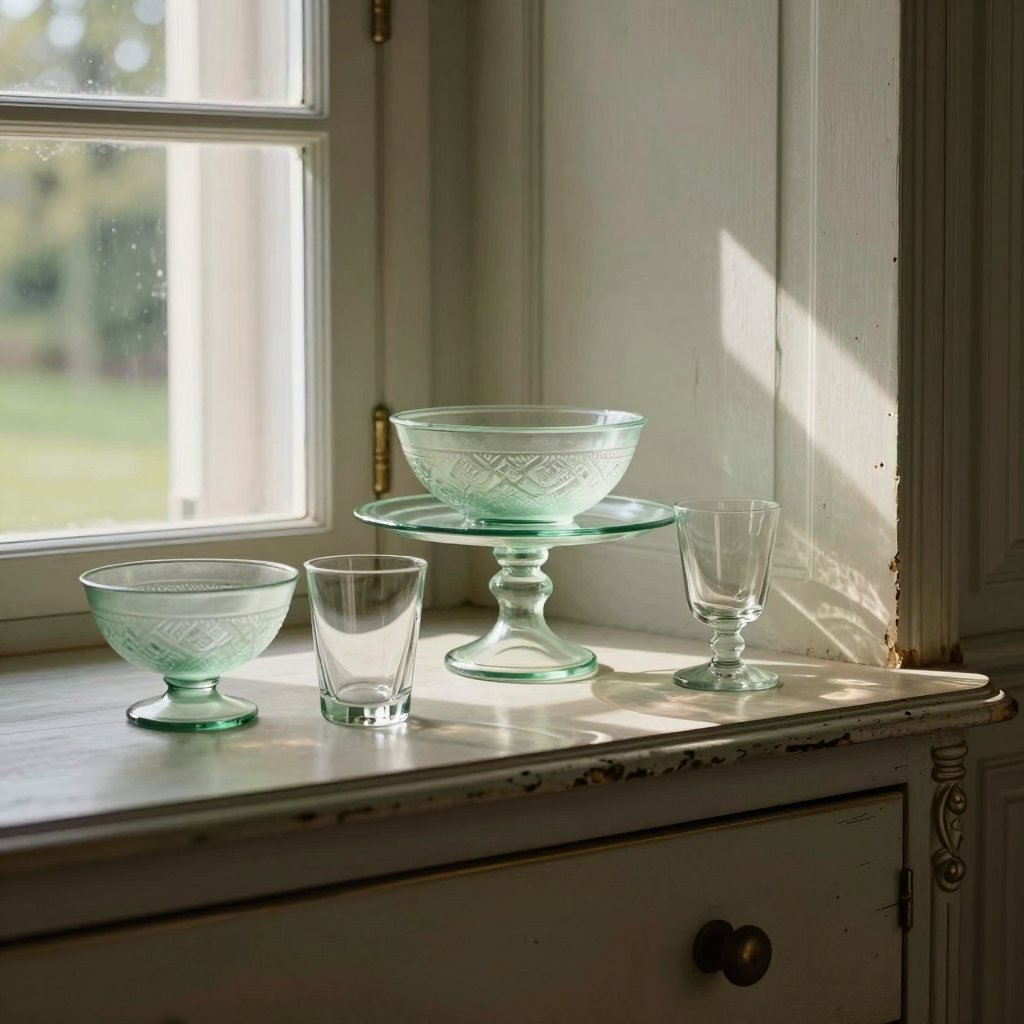
Uranium glassware contains a small proportion of uranium oxide, melted into the batch to give the glass a pale yellow-green to deep green colour in daylight and a bright green glow under ultraviolet light. Most surviving examples were made between the 1880s and the 1940s, in the United States, Bohemia, France and Britain. The glow test is quick, but it answers one narrow question: it records uranium in the glass, not a date, a maker or a value. These guides keep identification, safety and price as separate questions, and keep a seller’s statements apart from what can be checked.
Begin with the details
A 365 nm UV torch in a darkened room gives the clearest result: uranium glass glows vivid green, whatever its daylight colour. Weak torches and phone LEDs give a faint or absent glow, so test the lamp itself on a known piece first. Photograph the glow beside a daylight view and keep both with your records. A green glow records uranium in the batch; it does not date the piece or name the maker.
Radioactivity from uranium glass is measurable but low, and falls sharply with distance; display, handling and storage are ordinary collector practice. Food and drink use is a separate decision. Chipped rims and interior wear raise practical and hygiene questions a glow test cannot settle. Record decorative use clearly, and ask a qualified specialist before returning any old glass to table service.
Many pieces carry no mark at all; others carry a factory mark that identifies a maker without dating the piece. Note seams, polished chips and repairs in the condition record before comparing prices. We keep any seller’s attribution separate from the evidence, and treat an asking price as an asking price unless a completed sale is documented.
Questions collectors ask
Measurable radioactivity is low and drops further with distance, so display, handling and storage are ordinary collector practice. Most museums and health bodies simply counsel against daily food use. Treat pieces with chipped rims or heavy interior wear as display objects, and keep a specialist’s advice with the object record.
Common tumblers and small dishes often trade between 15 and 60 dollars; marked pieces, unusual colours and rare forms reach higher. An asking price is not a documented sale. Record condition and any attribution, then compare completed sales before paying for supposed rarity.
Occasional decorative use is a personal decision many collectors make; daily service is discouraged. Chips and worn interiors raise leaching questions the glow test cannot answer. If food use matters to you, ask a qualified specialist about the specific piece rather than the category.
Glass with uranium oxide added to the batch, produced mostly between the 1880s and the 1940s. It ranges from yellow-green to deep green in daylight and glows bright green under ultraviolet light. American, Bohemian, French and British factories all made it.
No. The glow records uranium in the glass, not its age; some modern glass also glows. Date a piece from its form, seams, marks and documentation, and keep the UV result as one observation among several.
From the journal
Uranium Glassware
A UV light answers one question about uranium glass: is uranium in the batch? Learn the lamp, the method and what the glow does not prove.
Keep exploring