
The object library · 21 / 35
Milk Glass
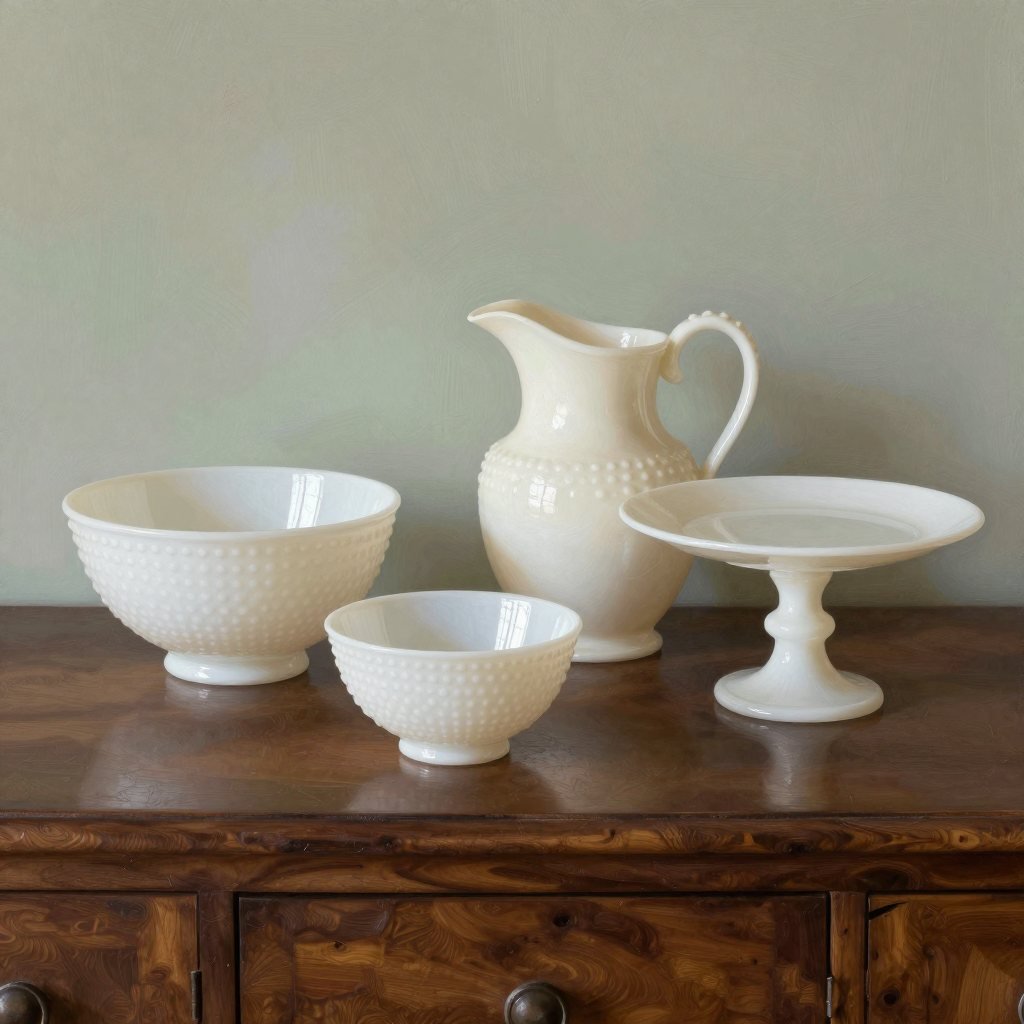
Milk glass is glass made opaque and white, most familiar with the hobnail pattern of Fenton and Westmoreland in America and with the opaline tradition of French factories. Production runs from the nineteenth century to recent decades, and the market mixes both with new imports sold as milk glass. The practical checks are few and quick: opacity against a strong light, the presence and sharpness of patterns, marks where they exist, and honest condition notes. As everywhere on this site, an asking price is not a documented sale.
Begin with the details
What to look for.
Test opacity against a strong light
True milk glass blocks light almost completely, where thinner ‘milky’ glass shows a warm glow through the wall. The opalescent rims of some pieces glow orange at the edge under light — a different effect from uranium glass’s UV glow. Record wall thickness and opacity in your notes.
Read marks and finish
Fenton used its oval mark from the 1970s, and much genuine older milk glass carries no mark at all; a mark is evidence, not a date. Westmoreland and other makers have their own documented marks. Check pattern sharpness, mould seams and the base finish against references before attributing.
Expect reproductions
Large volumes of new opaque white glass, much of it made abroad, are sold as milk glass at prices near the old. Weight, pattern definition and glass texture are the usual tells. Buy from clear photographs, keep the seller’s description, and verify against a reference before paying vintage prices.
Questions collectors ask
Before you go further.
What is milk glass?
Glass opacified to a dense white, made from the nineteenth century onward; hobnail pieces from Fenton and Westmoreland are the American classics, while French opaline is a closely related tradition. The name describes the material, not one maker or period.
Is milk glass valuable?
Common hobnail pieces often trade between 10 and 50 dollars; early coloured examples, rare shapes and documented pieces reach higher. The market includes large volumes of new glass sold at similar prices. Completed sales, not asking prices, set the reference.
How can I tell old milk glass from new?
Compare weight, pattern sharpness, mould seams and glass texture with a documented original. Much new production is lighter and less crisply moulded. A Fenton oval mark dates to the 1970s or later; unmarked pieces need the full comparison, not a quick test.
Does milk glass contain lead?
Some older white glass has tested high in lead, which matters for food use and is irrelevant to display. Testing kits and specialist advice answer the question for a specific piece. The opacity of the glass tells you nothing about its composition.
Keep exploring